30th Sep 2026
What to Know Before Tiling a Kitchen
Planning to tile your kitchen? Whether you’re renovating the whole floor space or just adding a simple splashback, there are a few practical things worth considering before you get started.
Here’s what to know before arranging installation.
Kitchen floor tiles need a little more consideration
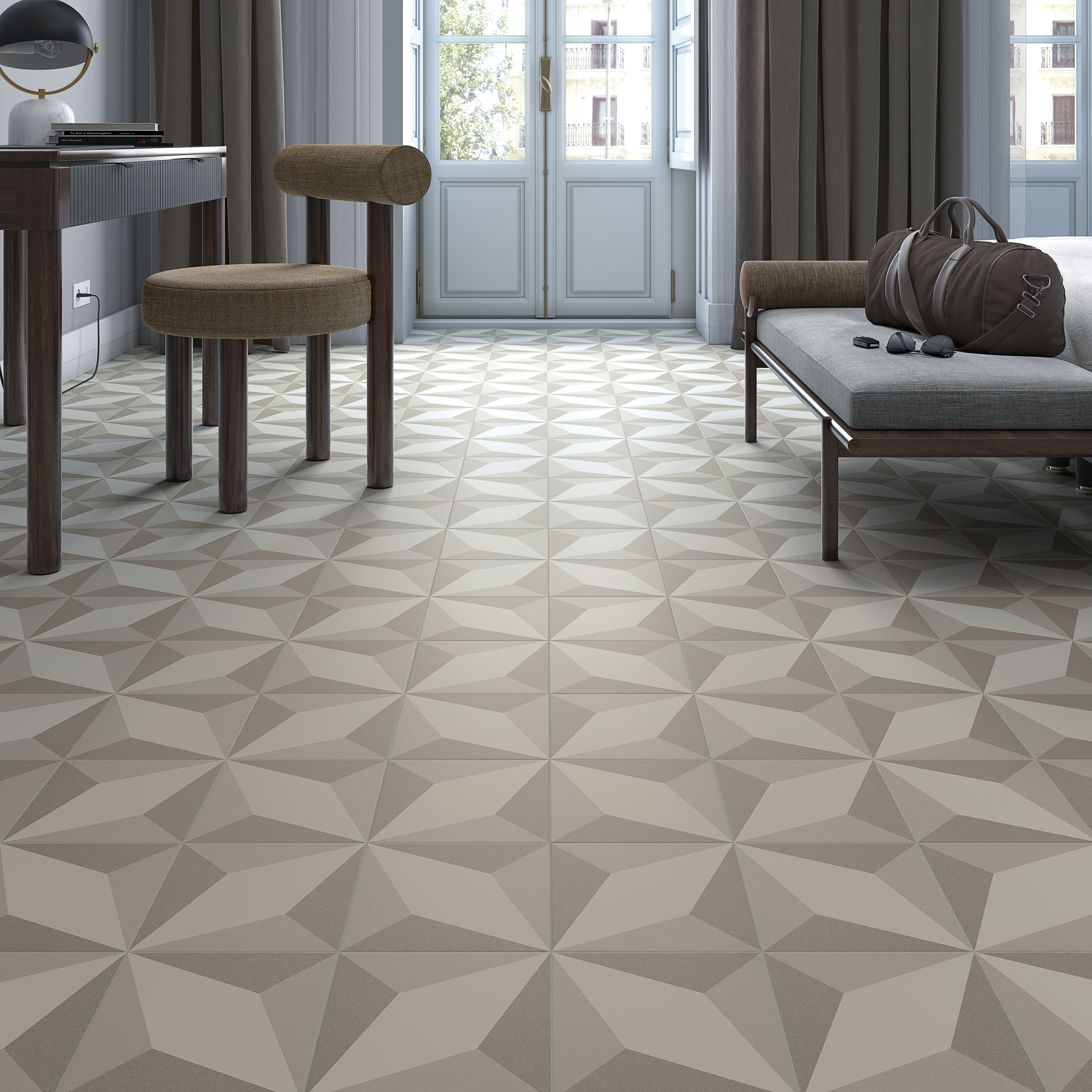
There’s plenty of room to play with different looks across your kitchen, but floor tiles need a little extra thought when it comes to practical performance.
The tiles need to withstand regular foot traffic, so look specifically for options rated for floor use. Floor tiles are specifically designed to withstand greater wear than wall-only tiles.
Porcelain is a particularly practical choice for a busy kitchen floor because it’s highly durable, low-maintenance and resistant to moisture and stains.
For more ideas on what to look for and which materials work well underfoot, check out our guide on the best kitchen floor tiles.
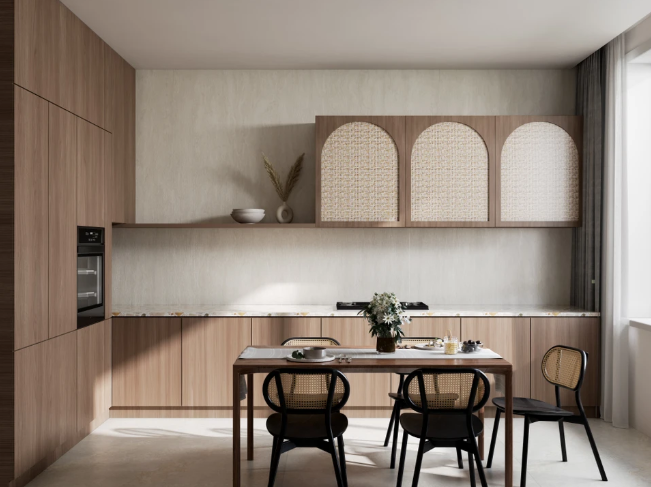
Larger tiles require a flatter surface and more careful installation
Tile size can affect how your kitchen looks, but it also makes a difference to installation and ongoing maintenance.
If you’re considering large-format tiles, keep in mind that they generally require a flatter surface and more precise installation than smaller tiles. Large-format tiles are a great choice for kitchen floor as they are so easy to clean with minimal grout joins and can help the space feel large and elongated.
Uneven surfaces can increase the risk of lippage, where the edge of one tile sits higher than the tile next to it. We’d recommend using a professional for large and extra-large format tile installation.
Your laying pattern can affect how many tiles you need
The way your tiles are laid affects the number of cuts required and, in turn, how much wastage you need to allow for.
As a general guide, a standard layout may require around 10% extra for cuts and breakages, while more complex patterns such as herringbone may require closer to 15%.
This is worth factoring in before ordering, particularly if you have a specific pattern in mind. Your tiler can help confirm the appropriate quantity for your chosen tile, layout and space.
Your measurements aren't the same as your final tile quantity
Measuring the square metres of your kitchen gives you a good starting point, but you’ll also need to allow for wastage. How much extra you need can depend on factors such as your tile size and laying pattern, as some layouts require more cuts than others.
We’d recommend having a professional tiler take the final measurements to help make sure you don’t over- or under-order.
But if you’d prefer to DIY it, check out our tile measuring guide for step-by-step instructions.
Your existing walls or floors may need work before tiling
The condition of the surface underneath your tiles, known as the substrate, can affect how much preparation is needed before installation begins. This is worth finding out early, as additional preparation can add time and cost to the job.
Depending on the existing surface and its condition, preparation may include:
- Levelling uneven surfaces: Walls and floors need to be sufficiently flat for tiling. This is particularly important for large-format tiles, where variations in the surface can become more noticeable.
- Priming: The substrate may need to be primed before adhesive and tiles are applied.
- Tile underlay: Some timber-based floors may require tile underlay to create a suitable surface for installation.
- The right adhesive: Adhesive needs to be suitable for both the tiles and the substrate they're being installed onto.
- Additional preparation: Existing finishes and the condition of the substrate can affect what needs to happen before tiling can begin.
Common questions on kitchen tiling & installation
Do I need a professional tiler to install my kitchen tiles?
Not necessarily. Some straightforward tiling jobs can be suitable for DIY, and a simple kitchen splashback can be a good place to start if you have the right tools and some DIY experience. For more complex projects, particularly those involving large-format tiles, difficult layouts or specialist preparation, we recommend using an experienced tiler.
If you're planning to do it yourself, check out our DIY tiling guides and kitchen splashback video before getting started.
How much does it cost to install tile in a kitchen?
The cost will depend on the size of the area, your chosen tiles, laying pattern and how much preparation is required before installation. As a rough guide, professional tiling for a small splashback could cost around $600, but every project is different, so it’s important to get your own quote.
If you need help finding an installer, contact Tile Space for a list of tilers.
What do I need to install kitchen tiles?
Along with your chosen tiles, you’ll typically need suitable adhesive, grout, spacers, cutting and measuring tools, and the right products to prepare the surface. Exactly what you need will depend on the tiles, substrate and area you’re tiling, so check the installation requirements before getting started.
You can find more information on the materials needed in our DIY tiling guide.
Can I use the same tiles on kitchen walls and floors?
Yes, provided the tile is rated for floor use. Because floor tiles are built for heavy wear, they are easily strong enough for wall applications like backsplashes. However, wall-only tiles are too thin and fragile to withstand foot traffic.
Do you tile a splashback from the bottom or top?
Generally, splashback tiles are installed from the bottom upwards, with the first row carefully set out to keep the installation straight. However, the overall layout should be planned before tiling begins so you can avoid awkwardly small cuts where the tiles meet cabinetry, corners or other visible edges.
Can you tile over existing kitchen tiles?
Yes, in some cases. Existing tiles need to be firmly bonded, sound and properly prepared before new tiles are installed. Loose, cracked or poorly bonded tiles can make tile-over-tile installation unsuitable. You’ll also need to consider the additional thickness of another layer of tiles and how this may affect surrounding surfaces, edges or clearances.
Do kitchen tiles need waterproofing?
Tiles themselves don’t make a surface waterproof. Whether waterproofing is required depends on where the tiles are being installed and how much moisture the area is exposed to. Your tiler can advise whether a waterproofing system is needed before installation.
What tile is best for a kitchen floor?
Porcelain is generally the strongest all-round choice because of its durability, low maintenance and resistance to moisture and stains. Whatever tile you choose, you’ll need to make sure it’s rated specifically for floor use.
How difficult is tiling a kitchen?
It depends on the job. A simple splashback can be relatively straightforward, while kitchen floors, large-format tiles and complex patterns often require more preparation and precision. If you’re not confident with the installation, it’s best to bring in a professional tiler.
Get inspired before you get started
Haven’t decided on your tiles yet?
Explore our kitchen tile inspiration for ideas across splashbacks, walls and floors.
When you’re ready to move forward, order samples online or drop into your local showroom to see how your favourite tiles look and feel in person. Our team will be happy to answer any questions you have about tile suitability, quantities and what to consider before installation.